Empowering Breakthroughs in the Study of Paul’s Epistle to the Church at Colossae
Clarifying the Textual Base
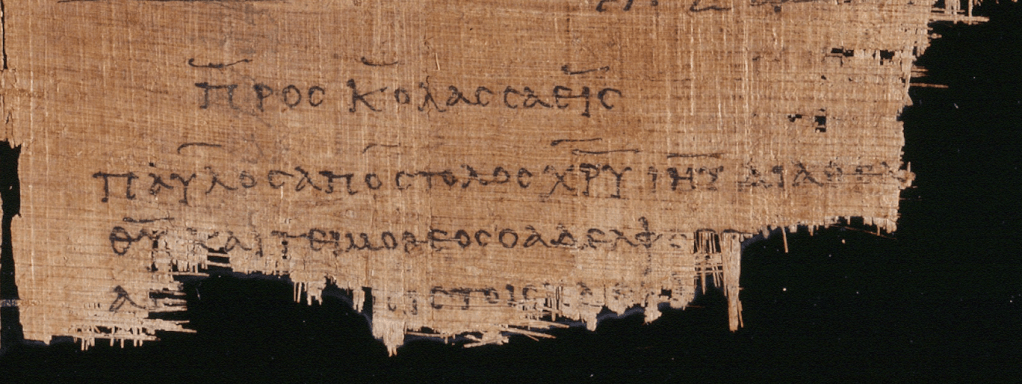
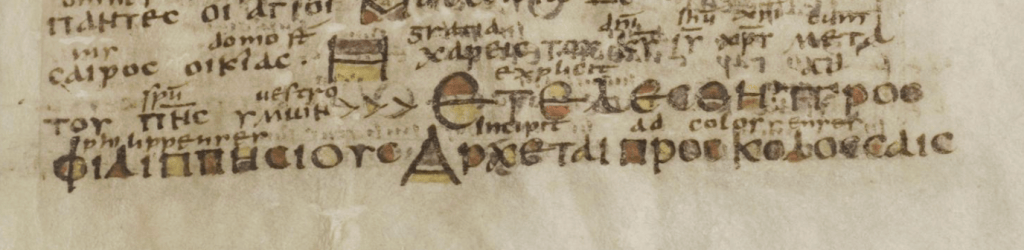
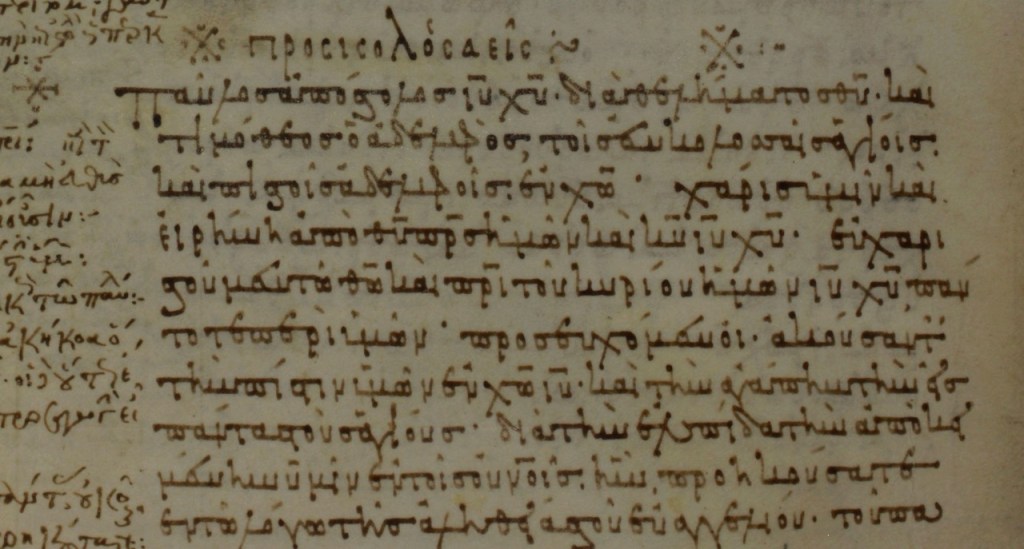
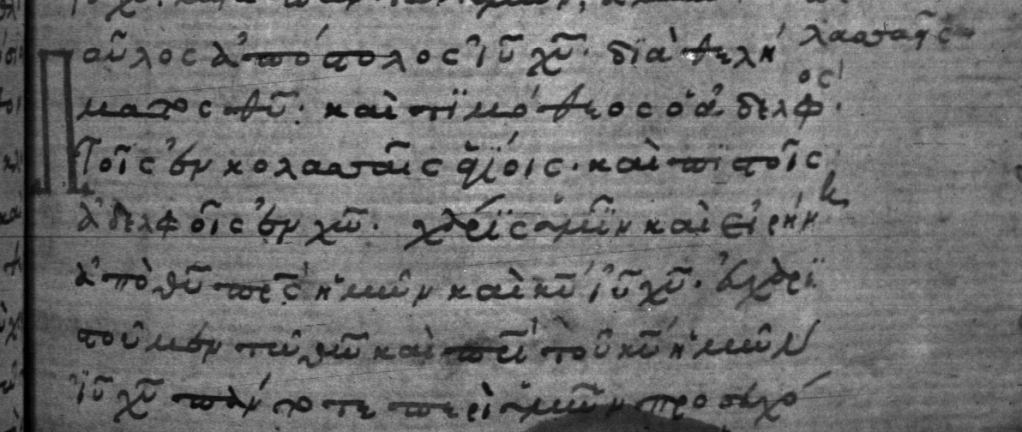
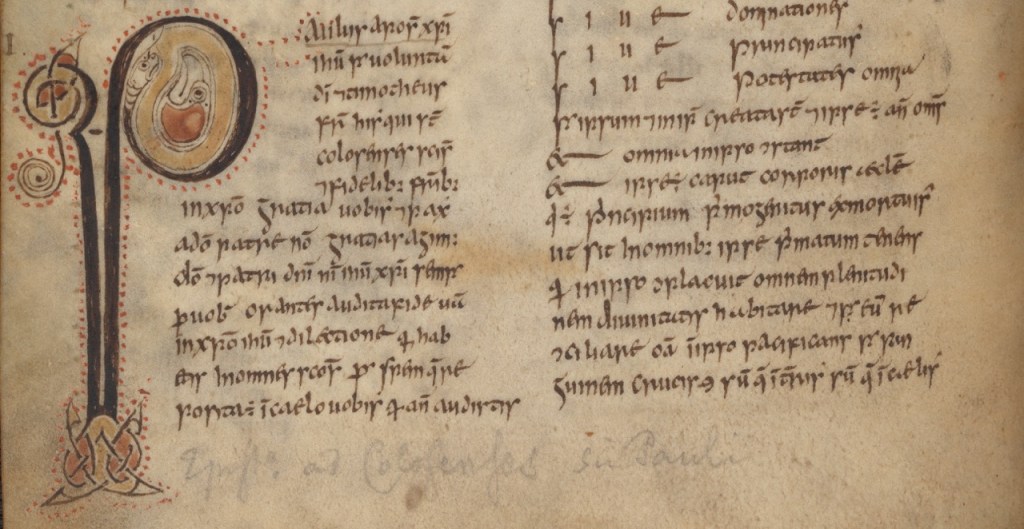
Surprisingly, even as the extant manuscripts of the New Testament have begun to circulate broadly for the past decade, major commentaries still report faulty data about the textual base of Colossians. Some of the major sources of manuscript data fail to properly catalogue manuscripts on Colossians, leading to some valuable omissions.
The Institute for Colossians Studies seeks to change this reality. In this phase of development, the Institute is identifying a comprehensive database of all manuscripts of Colossians and their available transcripts.
Expanding Commentary Access
Despite the wide availability of sources online, students of Colossians seeking to gain historical perspective or to engage in theological retrieval have worked with incredible limitations in terms of available sources. Several indices exist, but these are not comprehensive. Most older commentaries are stored in hard-to-read PDFs, and very few are translated out of the original language.
The Institute for Colossians Studies seeks to change this reality. In this phase of development, the Institute is working to make nearly 200 commentaries available, most of which are dated prior to 1900.
Patristic Era (100–500)
- Theodore of Mopsuestia
 Theodore of Mopsuestia (c. 350–428), bishop of Mopsuestia in Cilicia, was the most rigorous exegete of the Antiochene school and commented on the whole Pauline corpus. His commentary on Colossians survives entire only in an early Latin version, with portions of the original Greek preserved in the catenae.
 - John Chrysostom
 John Chrysostom (c. 347–407), presbyter of Antioch and later archbishop of Constantinople, was the most celebrated preacher of the Greek church. His twelve homilies on Colossians are sermons rather than a scholarly commentary: each works verse by verse through a portion of the epistle and then turns to sustained moral exhortation.
 - Tyconius
 Tyconius (fl. c. 370–390) was a lay theologian of Roman North Africa whose Liber Regularum, the first Latin treatise on the interpretation of Scripture, Augustine summarised at length in De Doctrina Christiana. He wrote no commentary on Colossians; what follows is a selection of excerpts from the Book of Rules at the points where he cites the epistle.
 - Ephraem the Syrian
 Ephraem the Syrian (c. 306–373), deacon of Edessa and the most celebrated of the Syriac fathers, is credited with a commentary on the Pauline epistles whose Syriac original is lost. It survives only in an Armenian version, rendered into Latin by the Mekhitarist fathers of San Lazzaro and published at Venice in 1893.
 - Severian of Gabala
 Severian of Gabala (355 – 408/425) provided a simple and concise commentary on most of the text of Colossians.
 - Theodoret of Cyrus
 Theodoret (c. AD 393 – c. 458/466) wrote his commentaries on the Pauline Epistles prior to 448. What follows is a translation from the Greek from Patrologiae Cursus Completus, published in 1857.
 - Pelagius
 Pelagius (c. 354–418) likely wrote his commentaries on the Pauline epistles shortly before his departure from Rome in 410.
 - Origen
 Origen (c. 185 – c. 253) composed a significant number of commentaries. This translation is of a fragment of Origen’s commentary on Colossians.
Early Middle Ages and Pre-Scholastic Era (500–1050)
- Venerable Bede
 Bede (c. 672–735) was one of the most prolific writers of the Early Middle Ages and produced the first florilegium of Augustine arranged into a commentary on the Pauline Epistles.
 - Florus of Lyon
 Florus of Lyon (d. c. 860) assembled an Expositio on the Pauline epistles entirely out of Augustine; the Colossians material is a catena of excerpts.
 - Atto of Vercelli
 Atto of Vercelli (c. 885–961) wrote an Expositio on the Pauline epistles, one of the few substantial commentaries of the tenth century.
 - Sedulius Scotus
 Sedulius Scotus (fl. 840–860), an Irish scholar working at Liège, produced the Collectanea on the Pauline epistles.
 - Rabanus Maurus
 Rabanus Maurus (c. 780–856), abbot of Fulda and later archbishop of Mainz, was the leading biblical scholar of the Carolingian renewal.
 - John of Damascus
 John of Damascus (c. 675–c. 749) is credited with a catena on the Pauline epistles drawn largely, though not only, from Chrysostom. The text here is a fresh English translation made directly from the Greek manuscript GA 2110.
 - Isho’dad of Merv
 Isho’dad of Merv, bishop of Ḥadatha, compiled his Syriac commentaries around 850, and his brief treatment of Colossians is a compact repository of East-Syriac exegesis, deeply indebted to Theodore of Mopsuestia.
 - Oecumenius of Trikka
 Oecumenius is a writer whose Pauline commentaries may date between the 6th to 10th centuries. He may be the same Oecumenius, the 6th century Monophysite Patriarch, who ministered in the city of Trikka, in modern Greece.
 - Photius of Constantinople
 Photius I of Constantinople (c. 815 – 893) provides a number of brief comments on Colossians.
Scholastic Era (1050–1500)
- Denis the Carthusian
 Denis the Carthusian (1402–1471), the “Doctor Ecstaticus,” commented on the whole of Scripture, including Colossians.
 - Peter of Tarentaise (Pope Innocent V)
 The Pauline postil “Dedi te in lucem gentium” comes down under two names — Peter of Tarentaise, later Pope Innocent V, and Nicholas of Gorran.
 - Thomas Aquinas
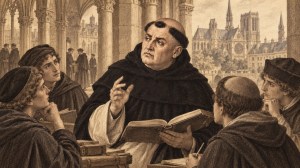 Aquinas lectured on Colossians as part of his course on the Pauline epistles; the lectura survives partly through student report.
 - Euthymius Zigabenus
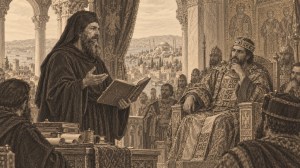 Euthymius Zigabenus (d. after 1118), a Byzantine monk under Alexios I Komnenos, wrote condensed scholia on the Pauline epistles.
 - Hugh of Saint-Cher
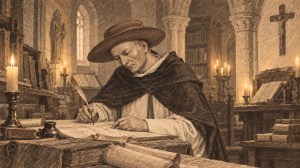 Hugh of Saint-Cher (c. 1200–1263), Dominican master at Paris, directed the production of the Postillae on Colossians.
 - Nicholas of Lyra
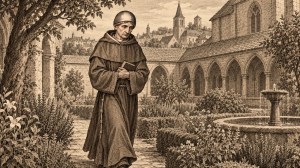 Nicholas of Lyra (c. 1270–1349), Franciscan master at Paris, wrote the Postilla litteralis, the most widely used biblical commentary of the later Middle Ages.
 - Peter Lombard
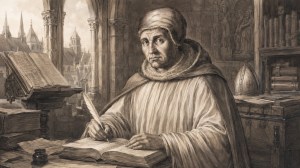 Peter Lombard (c. 1096–1160) produced the Collectanea on Paul, the “Magna glossatura” that became the standard Pauline gloss of the twelfth-century schools.
 - Theophylact of Ohrid
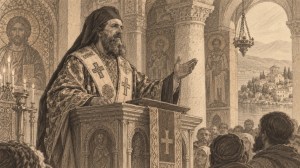 Theophylact of Ohrid (c. 1050–c. 1108) condensed Chrysostom’s Pauline exegesis into continuous commentary; translated here from the Latin version of Johannes Lonicerus.
 - Bruno of Cologne
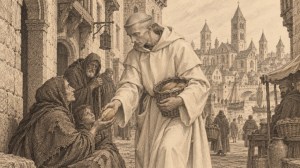 A commentary on the Pauline epistles printed under the name of Bruno the Carthusian (c. 1030–1101).
 - Lanfranc
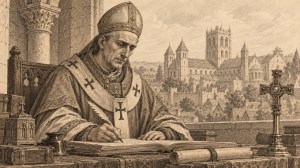 Lanfranc of Canterbury (c. 1005–1089) glossed the Pauline epistles for the schoolroom; his notes on Colossians are terse comments on words and phrases.
 - Anselm of Laon
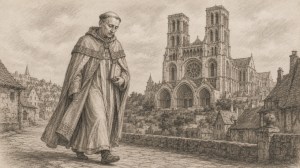 The Glossa Ordinaria on Colossians has its roots in the work of Walafrid Strabo but belongs to Anselm of Laon (d. 1117).
16th and 17th Centuries
- Thomas Cajetan
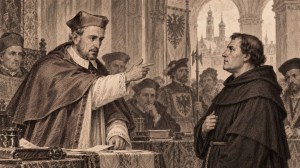 Cardinal Cajetan (1469–1534) read Paul against the Greek, correcting the received Latin text as he went.
 - Huldrych Zwingli
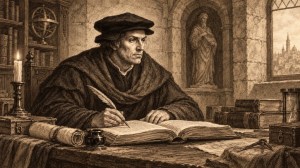 Zwingli (1484–1531) wrote a concise commentary on Colossians that serves as a humanist-Reformation exposition that emphasizes Christ’s supremacy and sufficiency, justification apart from human works and ceremonies, and the practical transformation of Christian life that flows from union with Christ.

